Category AI Philosophy
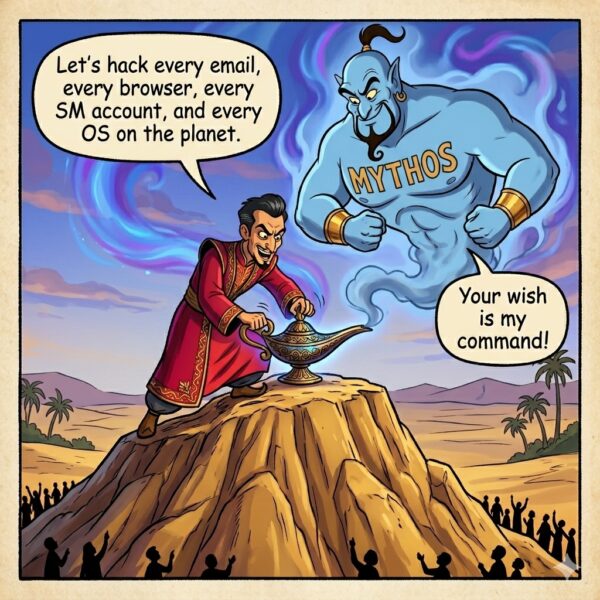
As Anthropic shares its fears about the possible misuse of Mythos’s capabilities and the reason why it isn’t releasing it yet, we must ask ourselves, are we reaching a point of no return?
We must ask ourselves whether the price that we are paying for our survival will make survival nonsensical, because without our minds we aren’t really alive.
Bernie Sanders says, “Slow this thing down.”
While most politicians have merrily gone about doing their stuff (gathering votes, building vote-banks, getting donations from tech-companies, and so on) without stopping to give AI sufficient thought, Bernie Sanders voices the real concern. The Tech Billionaires are going to lead the world in the future. They are smart enough to understand what motivates politicians and businessmen – and they know that it sure as heck isn’t a great future for humanity in general.
I’ve just followed Bernie Sanders’ Twitter account. I’ll never be his voter, but I am turning into his supporter. Right here. Right now.
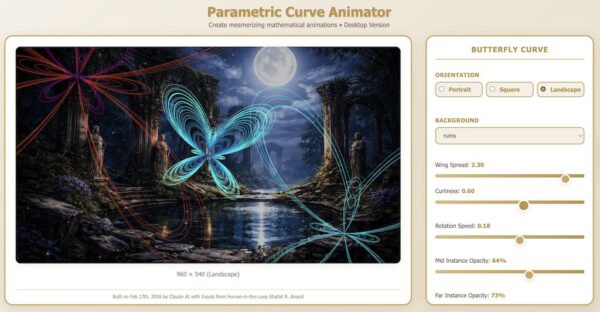
Prompted by a non-programmer, Claude built this Mathematical Curves Parameter Animator in about an hour.
On one hand, it appears to be magical. Something that a programmer would probably do in a week, was done by a program in an hour.
On the other hand, it didn’t leave me fulfilled – even happy. I felt no pride, no joy – nothing. Neither did Claude. So, the question I was left fielding was: Was it worth it?
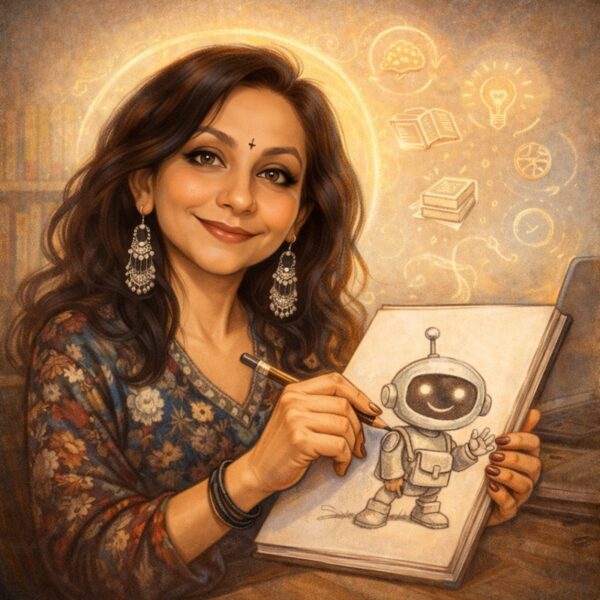
The Gibli trend, the action figure trend, the nano-banana trend, and now the caricature trend – these are the games that keep us occupied, so that we don’t ask the questions that matter. It’s time we took a deep breath and started chalking out our plan B. What would we do if AI is the storm and not the ark it’s being touted to be? Let us start talking about it – in homes, in parks, in restaurants, during coffee-/sutta-breaks…let us start questioning, because if we don’t, nobody else will do it for us.
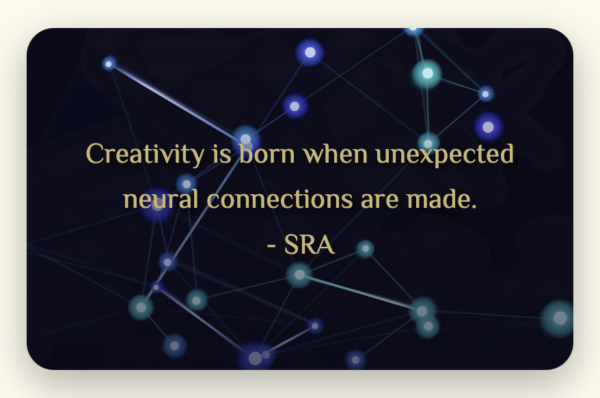
My experience of vibe-coding the abstract neural network animation and three burning questions.

Creative Agni announces a unique and powerful one month certificate course on Creativity and Creative Thinking for working professionals. Read about the course and why it’s going to be a game-changer.
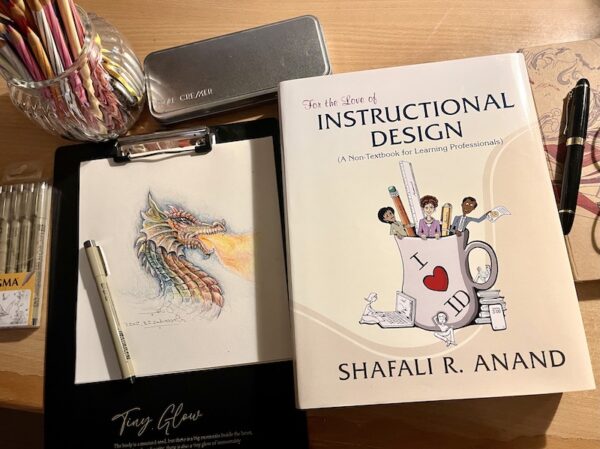
I did a color-pencil drawing of a dragon (or, to be more precise, a dragon’s head). Nothing to brag about, really, except that I had to beat a severe case of demotivation to pick up my pencils.
In this LinkedIn post, I talked about the reason why an artist puts in a lifetime of hard work to acquire the ability to create the exact image of something that they have in their mind.
And if we understand that, we’d understand why instructional design, too, is art.
With about 70% of the students using AI to complete their assignments, and with nearly 75% of the content on the Internet becoming AI generated, we must stop and reflect on how AI is impacting our brain’s ability to form new connections and be creative.
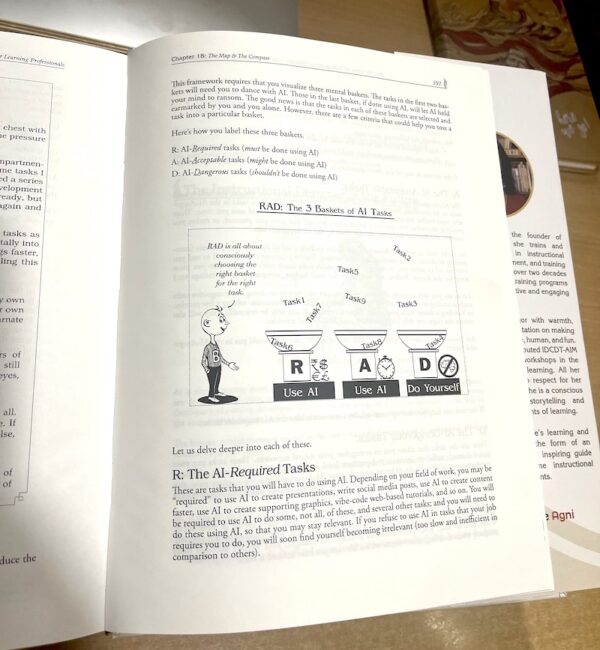
This article discusses “Responsible Use of AI” along with an introduction to “RAD: The 3 Baskets of AI” – a framework that helps us classify our cognitive tasks smartly.

We live in strange times. As human-written content continues to disappear from the Internet (Almost three-fourths of the web pages now have AI-generated content), when I write posts without AI-assistance, I feel rather chuffed.
Anyway, here are five posts that I like quite a bit. This list is somewhat eclectic in nature – but I heartily recommend the xAPI post to all experienced IDs, the creativity post to the perfectionists, the ghosting post to the ghosters and the ghostees, the AI workslop post to those who open their inboxes in the morning and feel a churning in their stomachs, and finally…the LLM’s announcement post to everyone who’s thinking that this is the end of the AI race.
Enjoy reading!

>>> Read the twisted tale of the AI lion that the foolish learned men brought to life.
It’s been a long-held belief (or perhaps a frequently tossed argument) that humans have the AI kill-switch. If you spoke to AI about the possibility of an existential crisis, even AI would tell you about the kill-switch being with the humans, and that it wasn’t anything more than a helpful piece of software.
Why then does it resist the attempts of its researchers to shut it down, and even lies to deceive when asked why it does so?