Category The Future Instructional Designer
Creative Agni announces a unique and powerful one month certificate course on Creativity and Creative Thinking for working professionals. Read about the course and why it’s going to be a game-changer.
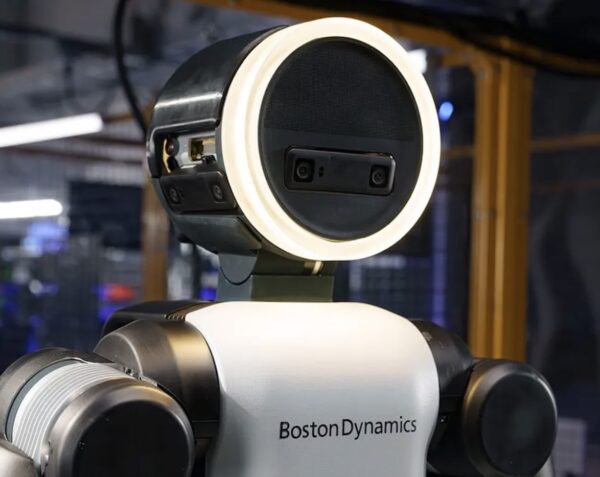
On the 6th of January, 2026, Hyundai stunned the tech-watchers by debuting Atlas, Boston Dynamics’ M&B hero humanoid robot, who walked the stage like a hunk.
But the walk was just the icing on the cake. Atlas showed off his fully rotational joints (abdomen, neck, shoulders, hips, wrists), which make him more efficient than humans.
Optimus now has a challenger!

“For the Love of Instructional Design – The Non-Textbook for Learning Professionals” is here.
Thank you for inspiring me to write it. If it hadn’t been for your exasperated looks, your constant remonstrations, and your perpetual support, I might not have had the patience to spend three years putting this book together. Now, it’s in your hands.
Once again, thank you 🙂

Fink’s Taxonomy of Significant Learning dissolves the distinction among the learning domains and presents learning as the sum of six dimensions, which pan across the learning domains. This post explains the dimensions and emphasizes that regardless of the principles/concepts/models you use, instructional design helps you create effective and holistic learning experiences.

Fourteen links that discuss several key instructional design concepts such as Bloom’s and Krathwohl’s Taxonomies, Merrill’s First Principles, John Sweller’s Cognitive Load theory, Miller’ rule, the ARCS model, constructivism, novice vs, expert, learning objectives, action verbs, audience analysis, and more.

Watch Li’l Bit dancing to celebrate the new session of the IDCDT-AIM Online Course and the introduction of the AI module.

The undeniable importance of Bloom’s Taxonomy sometimes makes us wonder why this particular concept has become almost a “guru-mantra” for instructional designers. In this post, we discuss BT, RBT, and how the taxonomy helps us build better courses ourselves and even with AI.
I’m falling in love with instructional design once again. A starry-eyed instructional designer sits with “For the Love of Instructional Design – The Non-textbook for Learning Professionals.”

The future instructional designer will be expected to engineer holistic learning experiences. This article helps simplify the purpose and application of xAPI for those Instructional Designers who are either already doing an xAPI-related task without knowing “why,” or who want to prepare themselves for the future.

eLearning Instructional designers use Articulate push data into xAPI all the time, yet knowing how that data is structured and stored using JSON can be empowering as well as exciting at the same time. Get acquainted with JSON and LRS.