
First, the current state of affairs.
“Fiction? No, I don’t read a lot of fiction.”
“I’ve read, maybe, a book a year, since I graduated.”
“Reading fiction? I haven’t got the time.”
Let’s face it. Most instructional designers don’t read enough…and when they do, they seldom read fiction.
“It’s not that I don’t read. It’s just that I don’t get the time.”
“I do read, but I read…you know, self-help books, because they are useful.”
“I don’t know why, but yes, I don’t read fiction anymore.”
And yet, we have more technology now, which is supposed to leave us with more time for recreation. Fifty years ago, our parents were working harder, had fewer physical comforts, and the whole world was economically worse off. But they were reading.
Perhaps they didn’t have Netflix or even television because now we spend most of our free time glued to our TV sets, watching the anchors remix, rehash, and repurpose the same content over and over again.
Unfortunately, as we moved away from fiction, we lost our most abundant library of instructional design examples.
Popular fiction exemplifies several important instructional design principles, but yes, it keeps those principles safely hidden under layers of storytelling. We must peel away the layers to get to them, and to peel them away and witness the engine that makes these stories transcend the limitations of “text and verbal symbols,” and turn into “contrived experiences” (Edgar Dale‘s Cone of Experience), we must get close and personal with fiction.
I’ll spin this post to present the three ID principles that are the most obvious, and I’ll save the one that shouts “look at me” from the first page of any best-seller, for dessert.
1. Simple to Complex
This weather-beaten principle, which is as old as the invention of fire and as natural as a mother’s love for her newborn, is something that can be experienced in every great work of fiction.
We see this principle at work in almost every piece of fiction that’s ever published.
The author introduces us to the main character, their cause, and the general setting, and allows us to absorb it. Only after the new environment, character, and setting have been anchored in our minds are additional complexities introduced.
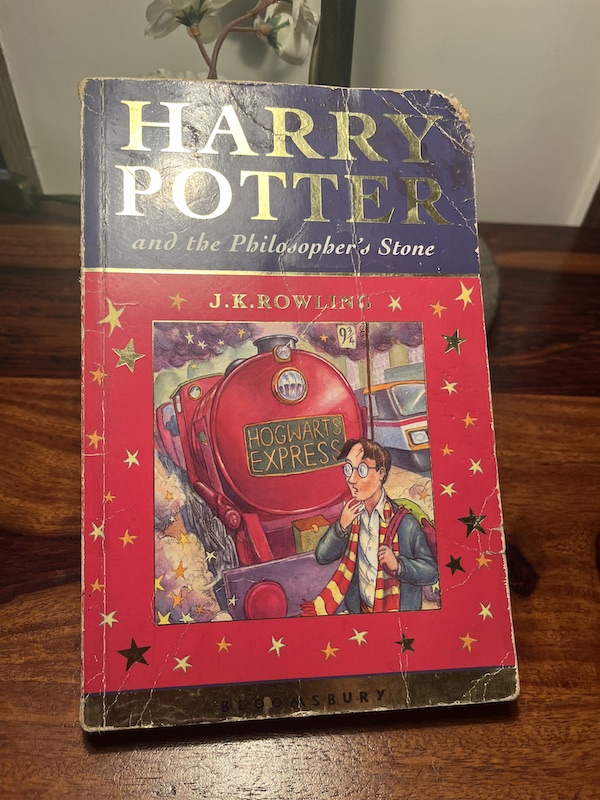
*** Dust off the cover of the first book in the Harry Potter series by J.K. Rowling and go through its first chapter.
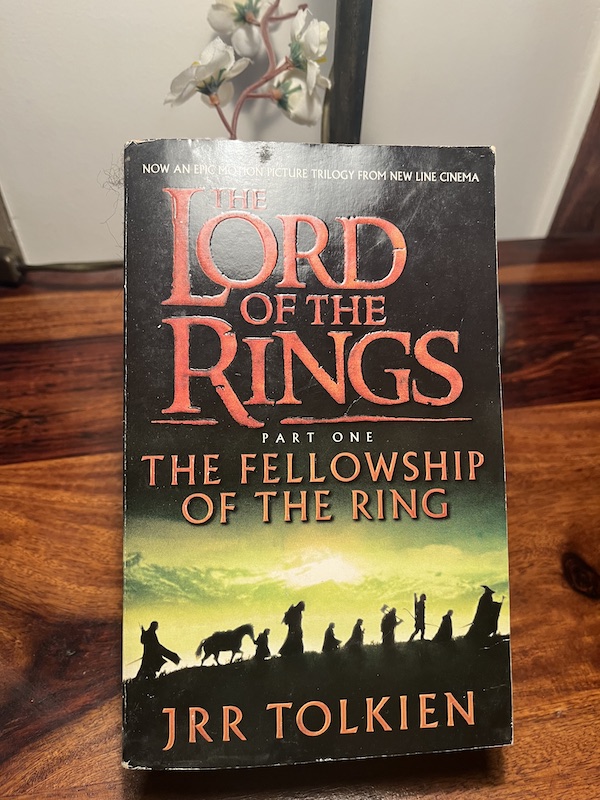
*** Find yourself the first book in the “Lord of the Rings” series and read its first chapter.
*** Go through the first chapter of “A Song of Ice and Fire” by George R.R. Martin.
*** Get the first book in the “Twilight” series by Stephanie Meyer (incidentally, called “Twilight”).
*** Read Lee Child’s first Jack Reacher mystery, “Killing Floor.”
2. The Schema Theory
The writers of popular fiction use the schema theory to their advantage (and also to the advantage of their readers).
Note: don’t confuse popular fiction with pulp fiction, which is amazing in its own way…
They “feel” their readers need to escape their immediate world (because it might be boring, mundane, repetitive, painful…or maybe just…hell on earth) and then they pick familiar elements from their reader’s schema to build a bridge between the reader’s existing reality into their protagonist’s fictional reality, helping the reader cross into the protagonist’s world. Such an escape wouldn’t be possible if the elements that their reader were already familiar with were completely missing from their tales.
Next, they work on their story diligently, painstakingly building it bit by bit, introducing new characters and settings, thus increasing the number of the story-related nodes in their reader’s schema. The Harry Potter series is once again an excellent example of building a new schema (of witchcraft, witches, and wizards) and then expanding the new schema with added details.
However, we ID’s often choose to ignore the schema of our learner. We go chugging merrily from one piece of content to the next, doing it all fairly mechanically. “Oh, here’s a new concept. Let me add an explanation, an example, a demo if it’s a process, then throw in an activity for practice…and I’m done with this objective. And, oh yeah, toss a question or two in the course-end quiz.” The audience profile is already tossing and turning in gumanamiyon ke andhere (the alleys of the forgotten and the nameless).
If you want to see how all this comes together, just pick a top-seller in a category of your choice. You see, a work of fiction, even when published by the biggest publisher in the world, sells only for one reason, and one reason only – it provides its readers an immersive experience that they don’t want to leave.
3. Learner Motivation (The ARCS Model)
If you ever want to see the whole ARCS model play out smoothly, look at your favorite book in the fiction category.
Remember that every instructional design concept assumes that you are creating content for a specific audience. Similarly, every novel is written for an audience. Quite often, you can look at the genre and get a general idea of the audience for which a book may have been written. For instance, the Harry Potter audience for the first two or three books comprised solely of children, but as Potter grew up (and the series unfolded), the complexity in the later novels increased, and its audience then expanded to include teens/young adults and even adults.

Let us reflect on Killing Floor by Lee Child. In this novel, Lee Child introduces Jack Reacher. The novel’s audience is mostly male, and to gain their attention, Child establishes Reacher in a high-tension environment very quickly. The language, the other characters, their motives; are all appreciated by Child’s readers. Reacher’s demolition of the existing hierarchy in the prison that allows him to gain the respect of the testosterone-driven/trouble-seeking male prison population connects with the readers.
The four components of the ARCS model reflect beautifully in fiction. Let us explore this in more detail and prove our point that fiction is a goldmine for instructional designers.
The first few pages get your Attention, which the author then sustains throughout the story by introducing variations (inclusion of new characters, change of pace, reversal of fortunes, and so on).
Relevance is established through the scenes (for instance, in the Lord of the Rings, the scenes awaken a sense of wonder, which is the primary driver for children; in Danielle Steel’s novels, the scenes are often written for dramatic effect, thus addressing its audience’s (women in their 30s/40s/50s) love for drama, and so on.)
Confidence, shines through when you realize that the characters are consistent and growing, that the writer is able to keep your attention anchored, Without such confidence-building measures, the reader would likely leave a book halfway. Your confidence in the character that he’ll ultimately solve the problem, keeps you turning the page. This is especially evident in mysteries that are solved by a specific protagonist. Sherlock Holmes and Robert Langdon – they both achieve this in their own ways
Several times in the middle of the story, but definitely at the end of it, the writer provides resolutions, which make the reader sigh with Satisfaction. The rush of serotonin makes you experience a certain elation, which comes from successfully helping the protagonist reach a fulfilling conclusion. The Romance genre thrives because of this extreme rush of satisfaction that the romantic novels provide at the end. Recall the Mills & Boon books, even the oh-so-artistic-looking Barbara Cartland and Denise Robbin romances of yore – they all aimed to make their readers sigh with the satisfaction of witnessing the protagonists embark upon a happily-ever-after.
So, you see? Fiction of every kind is a mine of practical tools – if only we stop shunning it. We shun it because when we were kids, our parents thought we’d get addicted to it – and so they told us that fiction-reading wasn’t a good thing. And we grew up with the understanding that we must spend our precious time “studying.” We all did that. But now, as instructional designers, it’s time to return to and check out the beautiful world of fiction.
That’s all, folks.
And if you like fiction, you’ll find “Metamorphosis – The Novella,” tucked between the chapters of “For the Love of Instructional Design,” mysteriously messy yet uncommonly instructive.
Image Credits: Cover Art Credit to respective Cover Artists/Photographs by Shafali





Leave a Reply