SCAMPER is a simple and effective toolkit that presents us with seven different techniques (or questions, or more contemporarily, prompts) that help us generate creative ideas.
Over the past years, I have fine-tuned my own process of steering and directing my creativity, but I’ve always believed that if you intend to help others acquire a skill or build a trait, you must use all the tools at your disposal. This is why I’d like to talk about SCAMPER, which is an amazing tool to help a toddling creative get a foothold in the ever-shifting, ever-changing landscape of creativity.
Important Note: I must also mention that while these tools (theirs, mine, ours) help us nudge our creativity out of its slumber, over time, we all must perfect our own custom methods that suit our circumstances and our temperament.
In this article, I’ll introduce the seven techniques of the SCAMPER model.
It’s important to remember that this show hits the road with a central product or process.
Here’s how the acronym cookie crumbles.
S: Substitute
C: Combine
A: Adapt
M: Modify
P: Put to a different use
E: Eliminate
R: Reverse/Rearrange
S: Substitute
The question that you ask is: What can you swap with what? (So, if you take away something, what do you put in its place?)
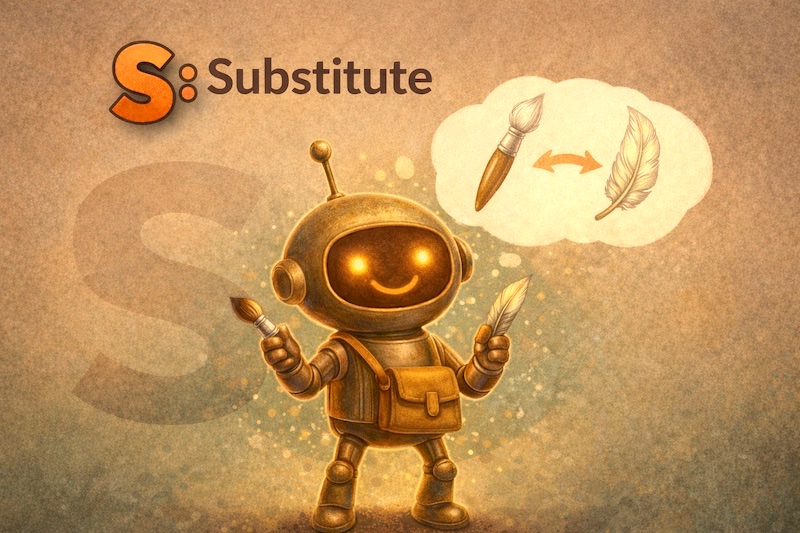
Example: The top management in several companies might right now be using the “Substitute” of SCAMPER, asking whether AI can replace a specific process/process owner. One could swap materials, people, processes, and so on. The point, however, is that the substitution should result in value-creation.
C — Combine
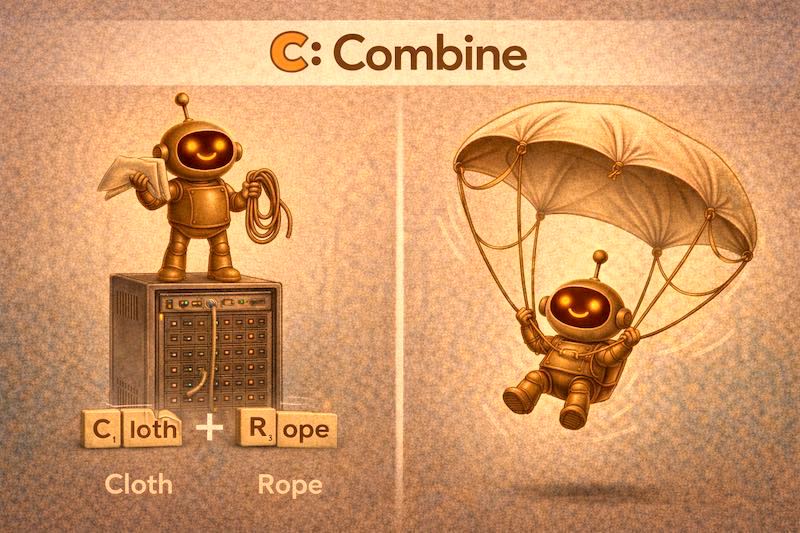
The question to ask is: What weddings can you perform? (Can you marry two different ideas, combine two functions, or bring together two processes?)
Example: Something that intrigues me to this day is suitcases with wheels. My first suitcase didn’t have wheels, and it was a behemoth. Now, every suitcase just whistles by, prancing behind its owner…like it’s a dog on leash. It combines two ideas. Similarly, we might combine two items to build a third.
A — Adapt
The question that we ask is: How can I adapt this to another function?
So while the product or the process might not be working at 100% efficacy in its adaptation, it would still solve a purpose and add value.
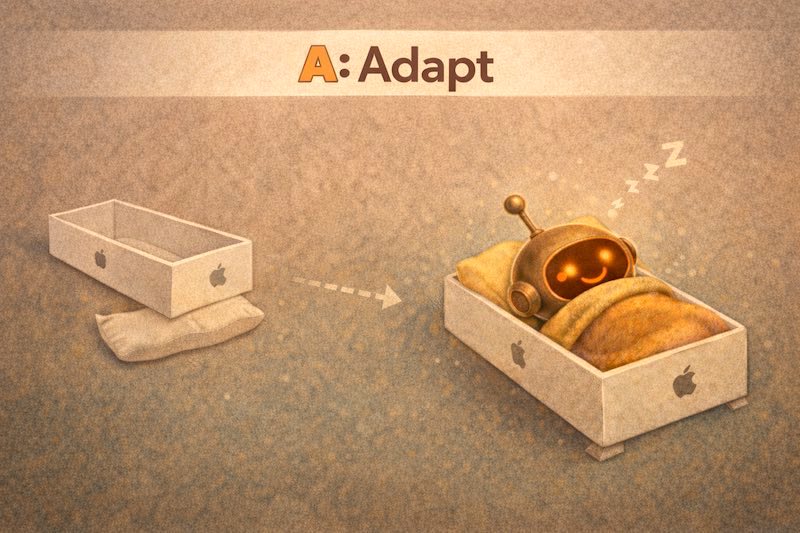
Example: At this point, I find myself wondering about the Great Indian Jugaad. When you are low on resources, jugaad becomes the mainstay of your life. Using large culvert pipes as living spaces is an apt example of Adaptation.
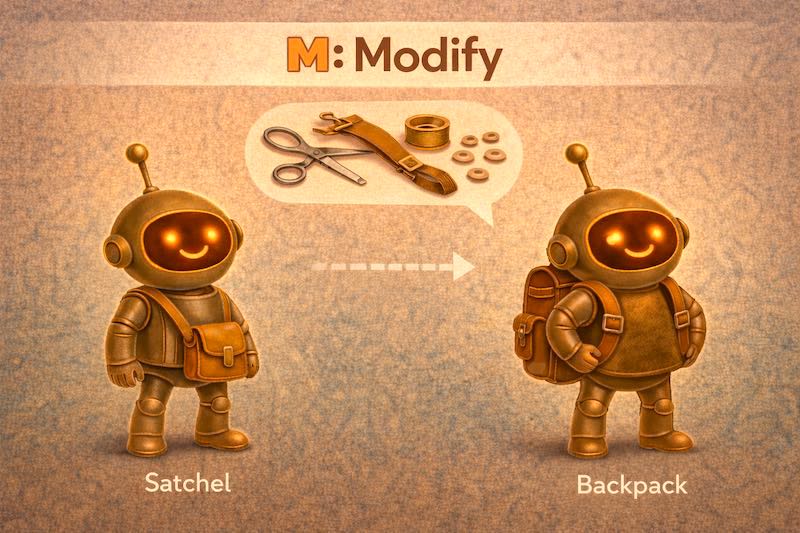
M — Modify (or Magnify/Minify)
The question that helps is: What can you change? Can you change the size, shape, functionality of what you see in front of you?
Example: Think of Instagram reels that show people repurposing garments, or making bags out of denim trousers. Also, think about the continuously reducing size of computer chips and even computers themselves.
P: Put to another use
The question to ask is: What else could this be for? (Note that this one’s pretty close to Adapt. I have a feeling that this was added to make the acronym sound better: Scamer vs. Scamper.) But because it’s here, let’s do justice to it. Think of it as changing the context in which it would be used or the problem it would solve; change the audience/user – and now try to see how it works.
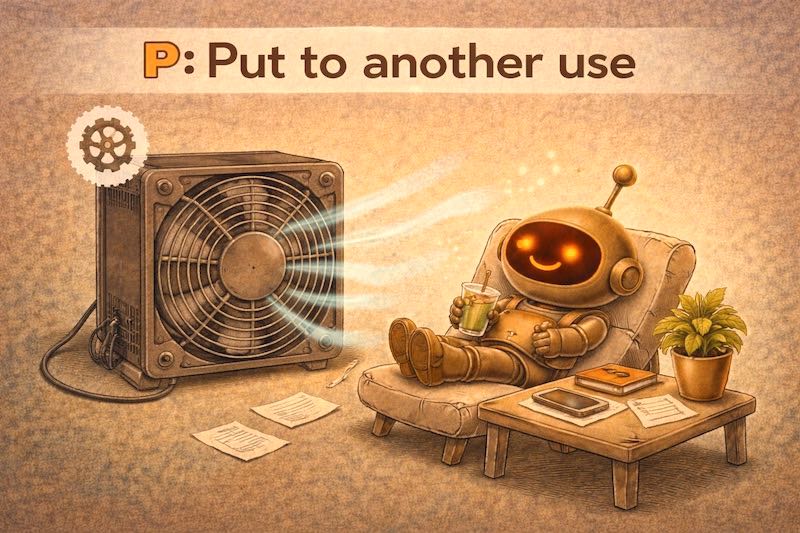
Example: I am reminded of my days on the shop floor, where the workers would beat the heat by lying in front of the industrial fans, and the managers would hang 1000-watt bulbs under their tables to keep their feet warm. So the objects (fan/bulb) remained the same, but they were put to a different use.
E: Eliminate
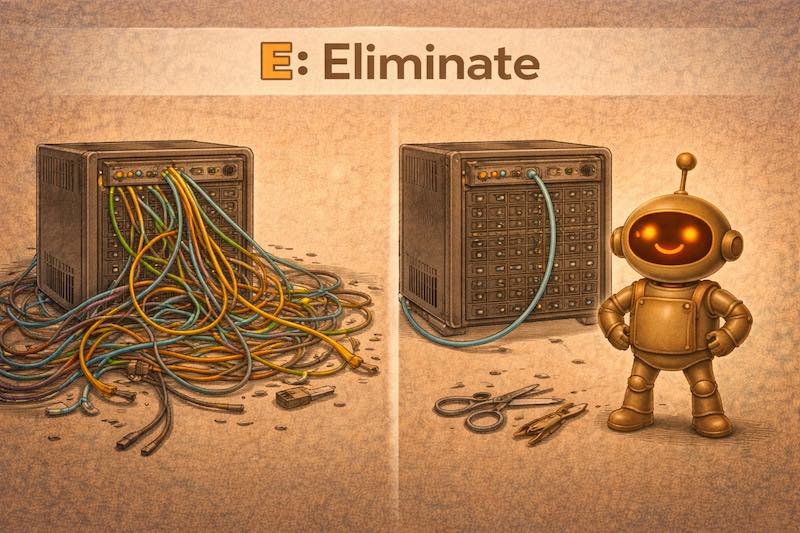
The question to ask would be: What can be removed without reducing/destroying the functionality of the product or process? What features could go – because they are extraneous anyway? What steps could be removed from a process?
Example: I find myself thinking about iPhone’s icons losing their gem-like quality. And then, simple things like decorative motifs on functional goods (cuckoo clocks and even the furniture) disappeared. Costs went down. Functionality remained unchanged.
R: Reverse (or Rearrange)
The question that you’d ask yourself would be: Can I reverse or rearrange the components, the order of the steps in a process, and add value? Cost-reduction, too, is value-addition.
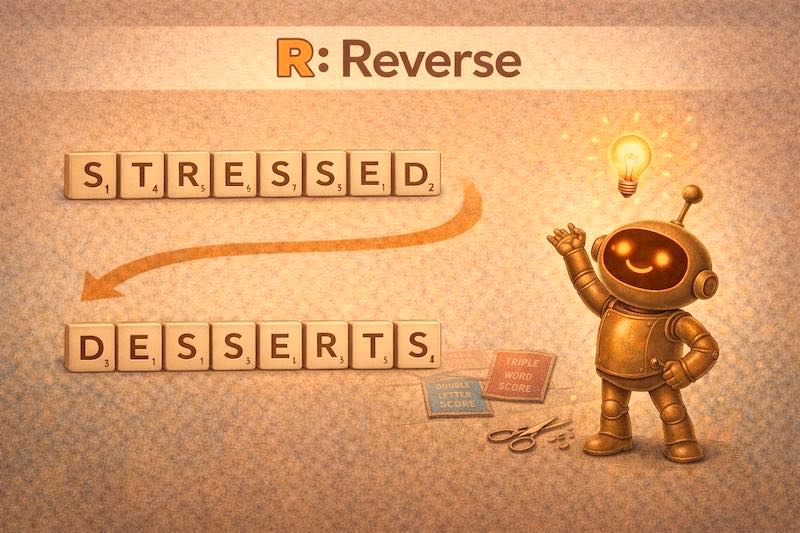
Example: I remember being struck by the idea of paying before you sit down to eat. The fast-food joints made the entire process faster and easier by asking the customers to pay first. By and by, this reversal of payment became a norm.
So, for instance, if you wanted to buy “For the Love of Instructional Design – The Non-textbook for Learning Professionals” on Amazon, or if you decide to register for Creative Agni’s Multi-mode Creativity & Critical Thinking Course, you’d go through the same experience.

Credits:
Written by Shafali R. Anand.
Li’l Bit images by ChatGPT.
Download the pdf of the article here.
SCAMPER Model Credits/References:
First developed by Bob Eberle in 1971, the SCAMPER technique is a structured brainstorming method designed to foster creativity by encouraging people to think in terms of modifying existing ideas, products, and processes. The acronym, as used today, originated from a checklist in Alex Osborn’s “Applied Imagination” (1953).




Leave a Reply